What happens during a qEEG assessment is a common question for people who want to learn more about their brain activity and mental health. A quantitative electroencephalogram (qEEG) records electrical activity in the brain and uses computer analysis to study patterns in the results. The process is noninvasive and usually involves placing small sensors on the scalp. At Brain Resource Center, people exploring a brain mapping process can learn how this assessment may support a more informed approach to brain health.
Key Takeaways
A qEEG assessment records electrical signals produced by brain activity.
Small sensors are placed on the scalp to collect EEG data.
The test is painless and does not send electricity into the brain.
Computer analysis helps identify patterns in recorded brain activity.
Results should be reviewed by a qualified professional and interpreted alongside symptoms and health history.
A qEEG does not diagnose every mental health or neurological condition on its own.
What Is a qEEG Assessment?
A qEEG assessment builds on a standard electroencephalogram (EEG). It records brain signals and uses computer tools to measure and compare different features of the data. These may include the strength and distribution of certain brainwave frequencies.
The results can be displayed as charts or color-coded maps. These images help a trained professional review patterns that may need further attention. However, a brain map is not a picture of thoughts, feelings, or a specific diagnosis.
A qEEG assessment may include:
Recording electrical activity from several scalp locations.
Measuring patterns across different brainwave frequencies.
Comparing selected results with reference data.
Reviewing findings alongside symptoms and medical history.
The purpose is to provide additional information about brain activity. It should not replace a full clinical assessment or other tests when they are needed.
How Does the Brain Mapping Process Begin?
The brain mapping process usually begins with a discussion about your concerns, health history, and goals. The provider may ask about sleep, attention, stress, mood, medications, and any past neurological conditions. These details help put the test results into context.
You may also receive instructions before the appointment. For example, the provider may explain how to prepare your hair and whether you should follow any specific instructions about caffeine or medication. Never stop prescribed medication unless your treating clinician advises you to do so.
Before the recording, the provider may:
Explain how the EEG sensors work.
Ask about current symptoms and relevant medical history.
Review any preparation instructions.
Help you get comfortable before the test begins.
This first step helps ensure that the assessment is appropriate for your needs and that you understand what the results can and cannot tell you.
What Happens During the qEEG Test?
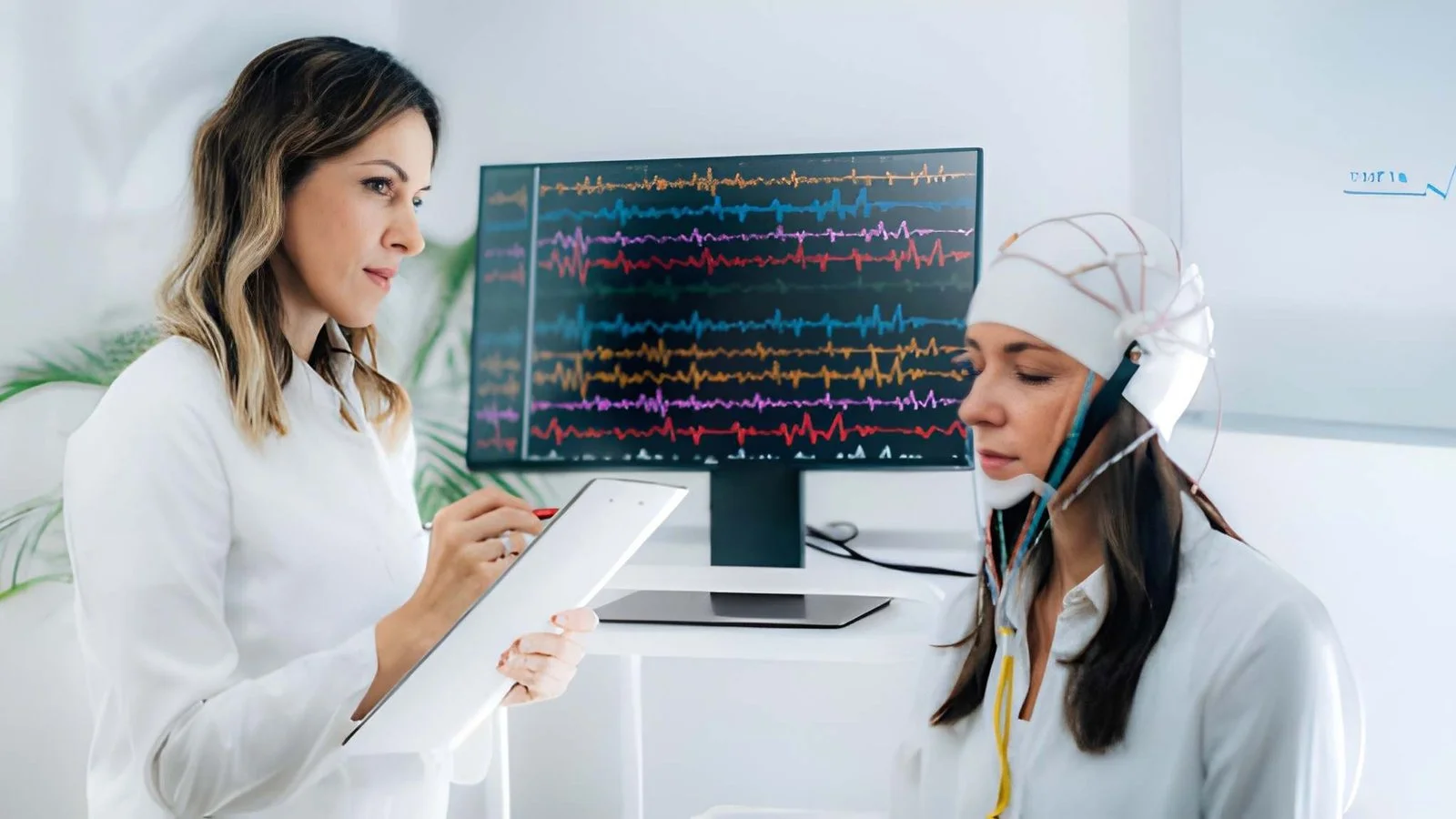
During the qEEG test, a provider places small sensors on your scalp. These sensors detect electrical signals produced by the brain. They do not send electrical currents into your brain, and the recording itself should not cause pain.
You may sit in a chair with your eyes open or closed, depending on the testing plan. The provider may ask you to remain still and relaxed while the system records your brain activity. In some cases, recordings may be taken under more than one condition.
A typical assessment may involve these steps:
Sensor placement: Small sensors are positioned on the scalp.
Signal recording: The system collects electrical activity from the brain.
Recording checks: The provider checks the signal quality and reduces interference.
Data analysis: Software measures selected features of the recorded activity.
Results review: A qualified professional explains the findings and their limits.
The recording time varies based on the protocol and the quality of the signals. The provider should explain the expected appointment length before testing starts.
How Are qEEG Results Analyzed?
After the EEG recording, computer software processes the data to measure patterns in brain activity. Depending on the method, the analysis may examine brainwave frequencies, signal strength, and how activity varies across different scalp locations.
The results may be shown in a brain map. Different colors can represent different measured values, but the meaning depends on the scale and analysis method used. A color by itself does not prove that a brain area is healthy or unhealthy.
During analysis, a provider may review:
The quality of the recorded signals.
Brainwave patterns across selected frequencies.
Differences from suitable reference data.
Findings that may relate to the person's reported concerns.
Whether further evaluation is needed.
It is important to understand that qEEG findings can be affected by movement, muscle activity, eye movements, medication, and other factors. A trained professional must check for these influences before drawing conclusions.
What Can a qEEG Assessment Tell You?
A qEEG assessment can provide information about patterns in electrical brain activity. When used appropriately, this information may help a qualified professional explore certain questions about brain function. However, it cannot explain every symptom or identify the cause of every difficulty.
For example, someone experiencing focus problems may need a broader assessment to understand whether sleep, stress, ADHD, or another factor contributes to those symptoms.
A qEEG assessment may be used to:
Add information to a wider clinical evaluation.
Support discussion about brain activity patterns.
Help inform selected neurofeedback plans when appropriate.
Provide a baseline for reviewing changes over time.
Guide decisions about whether further testing may be useful.
A qEEG result should never be treated as a diagnosis on its own. People seeking an adhd assessment nyc should receive a proper clinical evaluation, including a review of symptoms and how they affect daily life.
For reliable background on EEG testing, visit the National Institute of Neurological Disorders and Stroke. This resource explains how EEG testing records brain activity and how it may be used in medical care.
Is qEEG Testing Comfortable and Safe?
For most people, qEEG testing is a comfortable, noninvasive process. The sensors rest on the scalp and record natural electrical activity. The test does not involve surgery or send electrical signals into the brain.
Some people may find the sensor cap or electrode paste a little uncomfortable. The provider can explain what materials will be used and how the sensors will be removed after the recording.
Before your appointment, remember to:
Follow the provider's preparation instructions.
Ask questions if you are unsure about any part of the test.
Tell the provider about relevant medical conditions.
Share concerns about comfort or sensory sensitivity.
Ask how your personal data and results will be handled.
The safety and value of an assessment also depend on how its results are used. Computer-generated brain maps should be interpreted carefully, with attention to clinical history and the limits of the testing method.
How Can Brain Mapping Support a Personalized Care Plan?
Brain mapping may provide additional information when a provider is considering suitable care options. The results should be combined with a person's symptoms, health history, and treatment goals rather than used alone to choose a plan.
For example, someone asking, “What Is Neurofeedback?” may learn that it is a form of training in which a person receives feedback related to measured brain activity. In selected cases, qEEG findings may help inform the choice of a neurofeedback protocol. However, the usefulness of this approach varies, and the evidence differs across conditions.
A wider care plan may also consider:
Psychological or medical evaluation.
Counseling and behavioral strategies.
Sleep habits and stress management.
Other treatments recommended by qualified clinicians.
Follow-up reviews to check progress.
People considering neurofeedback for anxiety nyc, depression therapy new york, or insomnia treatment nyc should discuss the available evidence and treatment options with a qualified professional. The same applies to people exploring natural anxiety relief or support from a stress management therapist.
For those considering neurofeedback for depression, tourette syndrome treatment, Post Traumatic Stress Disorder Treatment NYC, neurofeedback for stroke recovery, or TBI treatment in nyc, a suitable medical evaluation is especially important. qEEG testing alone cannot confirm that neurofeedback will help with any of these conditions.
What Should You Do After a qEEG Assessment?
Once the analysis is complete, the provider should explain the findings in clear language. You should have a chance to ask questions about what the results mean, what they do not mean, and whether further evaluation is needed.
A helpful results review should cover:
The main findings from the recording.
Any limits or possible sources of error.
How the findings relate to your symptoms.
Whether additional testing or treatment may be appropriate.
How progress will be reviewed if you begin a treatment plan.
If you are considering a brain performance center, ask how its professionals interpret qEEG data and how they decide which services may be suitable. A responsible provider should be clear about the limits of brain mapping and avoid promising guaranteed outcomes.
You can also ask whether the assessment is necessary for your goals or whether another type of evaluation would be more appropriate.
Introducing Brain Resource Center
Brain Resource Center offers services related to brain mapping, neurofeedback, and mental health support in New York. People who want to understand their brain activity can ask about the assessment process, how results are reviewed, and whether further care may be appropriate.
The center can help you learn more about available options, including neurofeedback New York services. If you are exploring adhd therapy nyc or other forms of support, discuss your concerns and goals with a qualified provider before deciding on a treatment plan.
You can visit the Brain Resource Center website to learn more about its services and assessment options.
Conclusion
A qEEG assessment records electrical brain activity and uses computer analysis to identify patterns that may provide additional information about brain function. The process generally involves placing sensors on the scalp, recording signals, reviewing the data, and discussing the findings with a qualified professional. Although brain mapping can support selected care plans, it cannot diagnose every condition or predict treatment success on its own.
Understanding what happens during a qEEG assessment can help you prepare for your appointment and ask useful questions about the results. Contact Brain Resource Center to learn more about qEEG assessments, discuss your concerns, and explore the options that may best fit your needs.
Frequently Asked Questions
-
The appointment length varies based on the recording method and assessment plan. Your provider can explain how much time to allow for preparation, recording, and results review.
-
No. The test uses scalp sensors to record electrical activity. You may notice some pressure from the sensors or mild discomfort from the materials used.
-
A qEEG test cannot diagnose ADHD on its own. Diagnosis requires a clinical evaluation of symptoms, history, and how those symptoms affect daily life.
-
An EEG records electrical activity in the brain. A qEEG uses computer analysis to measure and display selected features of that recorded activity.
-
Not always. Whether qEEG testing is useful depends on the provider, the training method, and the person's needs. Ask your provider why the test is recommended and how the findings will guide care.
