
From a neuroscience perspective, January 1st has no special significance. The calendar flips but nothing inside you suddenly resets. Your brain doesn't know that it's time to set goals, overhaul your life, and become a new “you.”
Winter, by nature, is a slower season. You see this all around us: trees enter dormancy, animals hibernate or migrate, and ecosystems shift toward conserving energy. Humans are no different. During the winter months, shorter days affect our circadian timing, melatonin patterns, energy levels, emotion regulation, and more. We're naturally wired to slow down during this time.
So if your January feels a little slower than you expected, maybe that's the whole point.
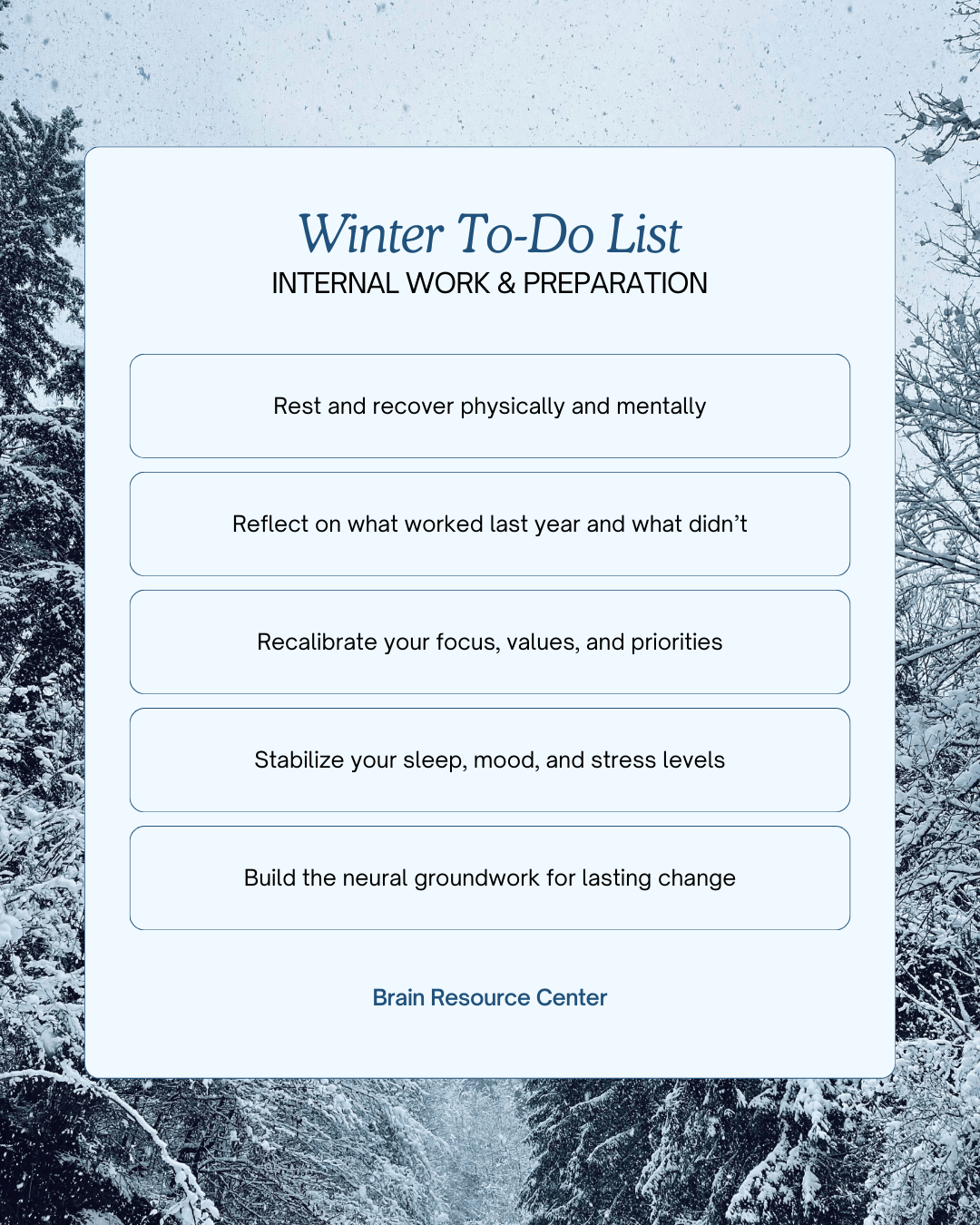
But don't be fooled by winter's stillness. Beneath the surface, nature is quietly preparing for growth in the spring and we can follow its lead. Now is the time to rest, recover, and recharge. It's also a good time to reflect, clarify priorities, and start planting the seeds you want to grow this year.
Many calendars and cultures align the start of the new year with the spring equinox, celebrating the natural renewal and growth that follows winter. There's wisdom in that. During the spring season, our energy levels, mood, dopamine signaling, and cognitive flexibility generally improve. Motivation will come more organically, goals will feel more achievable, and our brains will be primed for novelty and change. We can leverage this natural momentum by creating new habits, learning new skills, challenging our brains, and taking action toward our goals.
Winter is for rest, spring is for action.
At Brain Resource Center, we help people regulate their nervous system, optimize their brain health, and create lasting change. If your brain and mental health is something you want to prioritize and invest in this year, reach out to us to get started!